
DJI Air 3S
DJI Air 3S — Technical specifications, camera systems, flight performance and practical selection guidance for this DJI drone.
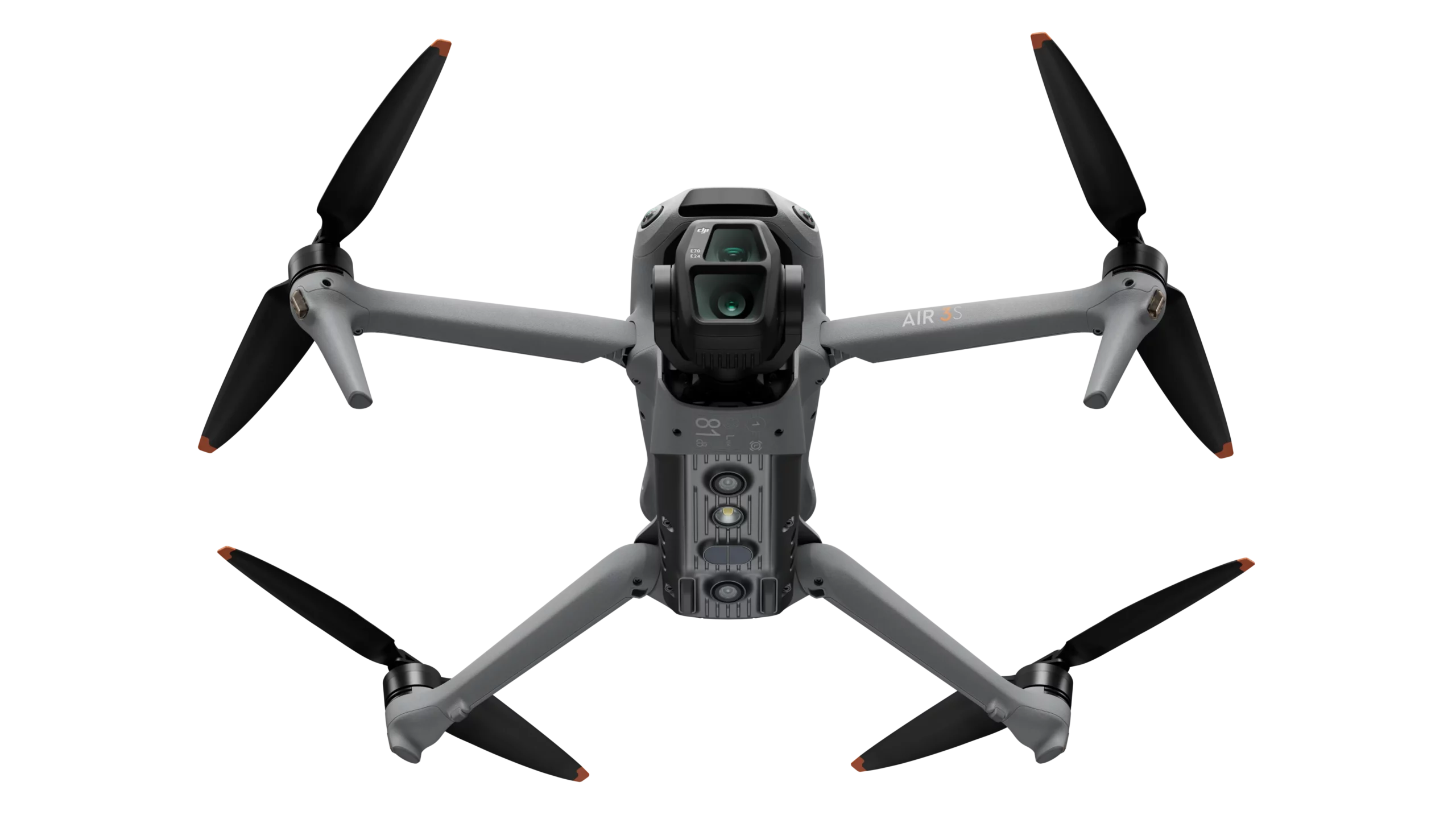
What makes this model different
Two cameras cover both wide landscapes and tighter aerial compositions without flying closer to the subject.
Practical use and positioning
The one-inch wide camera and medium telephoto module make it especially suitable for travel filming and outdoor projects.
Manufacturer figures are given for defined test conditions and specific configurations. Actual performance, available functions and regulatory classification depend on the aircraft, battery, firmware and country.
Technical specifications
Manufacturer figures are given for defined test conditions and specific configurations. Actual performance, available functions and regulatory classification depend on the aircraft, battery, firmware and country.
Aircraft and dimensions
| Takeoff weight | 724 g |
|---|---|
| Dimensions | Folded: 214.19 × 100.63 × 89.17 mm |
| EU class | C1 |
| Wind resistance | 12 m/s |
| Operating temperature | −10 to +40 °C |
Imaging and camera
| Camera sensor | 1-inch CMOS 50 MP wide + 1/1.3-inch CMOS 48 MP medium tele |
|---|---|
| Lens | 24 mm equivalent (wide) + 70 mm equivalent (medium tele) |
| Video capture | 4K/120 fps (slow motion) |
| Gimbal stabilization | 3-axis mechanical |
| Internal storage | 42 GB built-in |
Flight, battery and connectivity
| Maximum flight time | 45 min (DJI test conditions) |
|---|---|
| Maximum hover time | 41 min (DJI test conditions) |
| Battery | 4276 mAh / 62.5 Wh |
| Obstacle sensing | Omnidirectional vision + forward-facing LiDAR |
| Video transmission | DJI O4; up to 10 km in CE conditions |
Flight control and operating conditions
Obstacle avoidance and intelligent modes assist the pilot but do not replace responsible flight decisions. Check the correct controller, activation requirements, airspace restrictions, EU class label and battery configuration before use.